Generate a support packet
The Support Packet is used to help customers diagnose and troubleshoot issues. Use the System Console or the mmctl system supportpacket command to generate a zip file that includes configuration information, logs, plugin details, and data on external dependencies across all nodes in a high-availability cluster. Confidential data, such as passwords, are automatically stripped.
Generate
- Web/Desktop
- mmctl
-
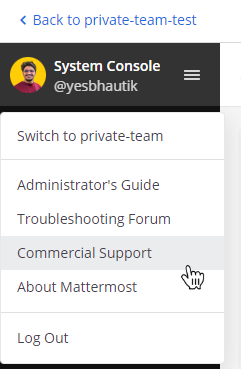
Go to the System Console, and select Commercial Support from the System Console menu.
-
Select Download Support Packet. A zip file is downloaded to the local machine. You'll be notified if any packet files are unavailable during packet generation. See the
warning.txtfile for details.
Run the mmctl system supportpacket command to generate and download a Support Packet to share with Mattermost Support.
go run ./cmd/mmctl system supportpacket
Downloading Support Packet
Downloaded Support Packet to mattermost_support_packet_.zip
Sanitize confidential data
Please sanitize any confidential data you wish to exclude before sharing the packet with Mattermost.
When present, the following information is automatically sanitized during packet generation: LdapSettings.BindPassword, FileSettings.PublicLinkSalt, FileSettings.AmazonS3SecretAccessKey, EmailSettings.SMTPPassword, GitLabSettings.Secret, GoogleSettings.Secret, Office365Settings.Secret, OpenIdSettings.Secret, SqlSettings.DataSource, SqlSettings.AtRestEncryptKey, ElasticsearchSettings.Password, All SqlSettings.DataSourceReplicas, All SqlSettings.DataSourceSearchReplicas, MessageExportSettings.GlobalRelaySettings.SmtpPassword, ServiceSettings.SplitKey, FileSettings.ExportAmazonS3SecretAccessKey, ServiceSettings.GoogleDeveloperKey, and ServiceSettings.GiphySdkKey (from Mattermost v11.6.0).
Share the packet with Mattermost
Add the generated Support Packet to a standard support request, or share with with the Mattermost team you're working with.
Contents of a Support Packet
The contents of a Mattermost Support Packet can differ by server version. Select the tab that corresponds to your Mattermost version to see the files included in the Support Packet.
- v11.0 and later
- v10.11
- v10.10
- v10.5 to v10.9
- Prior to v10.5
Cluster-wide files
The following cluster-wide files are located in the root directory of the Support Packet:
- metadata.yaml
plugins.json(all active and inactive plugins)sanitized_config.json(sanitized copy of the Mattermost configuration)stats.yaml(Mattermost usage statistics)jobs.yaml(last runs of important jobs)diagnostics.yaml(system and plugin diagnostics)permissions.yaml(role and scheme information)postgres_schema_dump.sql(PostgreSQL database schema information including tables, indexes, constraints, and other metadata to assist with database configuration diagnosis)warning.txt(present when issues are encountered during packet generation)tsdb_dump.tar.gz(present when the Metrics plugin is installed and the Performance metrics option is selected when generating the Support Packet)
Node-specific files
The following node-specific files are located in node subdirectories:
<node-id>/mattermost.log(Mattermost logs for each node)<node-id>/audit.log(Mattermost audit logs for each node)<node-id>/ldap.log(AD/LDAP logs for each node)<node-id>/notifications.log(notifications logs for each node)<node-id>/cpu.prof(Go performance metrics for each node)<node-id>/heap.prof(Go performance metrics for each node)<node-id>/goroutines(Go performance metrics for each node)
Diagnostics highlights
The Support Packet diagnostics.yaml file includes system and plugin diagnostics to support troubleshooting and configuration validation.
Plugin diagnostic data
The following additional plugin diagnostic data is available when the plugin is enabled and operational:
- GitHub:
/github/diagnostics.yaml - GitLab:
/com.github.manland.mattermost-plugin-gitlab/diagnostics.yaml - Jira:
/jira/diagnostics.yaml - Calls:
/com.mattermost.calls/diagnostics.yaml - Boards:
/focalboard/diagnostics.yaml - Playbooks:
/playbooks/diagnostics.yaml - MSCalendar:
/com.mattermost.mscalendar/diagnostics.yaml - Google Calendar:
/com.mattermost.gcal/diagnostics.yaml
From v10.11, Support Packets include PostgreSQL database schema dump information that provides comprehensive metadata to help diagnose database configuration issues, performance problems, collation mismatches, and other database-related issues.
Cluster-wide files (root directory):
- metadata.yaml
plugins.json(all active and inactive plugins)sanitized_config.json(sanitized copy of the Mattermost configuration)stats.yaml(Mattermost usage statistics)jobs.yaml(last runs of important jobs)diagnostics.yaml(core plugin diagnostics data)permissions.yaml(role & scheme information)postgres_schema_dump.sql(PostgreSQL database schema information including tables, indexes, constraints, and other database metadata to assist with database configuration diagnosis)warning.txt(present when issues are encountered during packet generation)tsdb_dump.tar.gz(present when the Metrics plugin is installed and the Performance metrics option is selected when generating the Support Packet)
Cluster-specific files (in node subdirectories):
<node-id>/mattermost.log(Mattermost logs for each node)<node-id>/audit.log(Mattermost audit logs for each node)<node-id>/ldap.log(AD/LDAP logs for each node)<node-id>/notifications.log(notifications logs for each node)<node-id>/cpu.prof(Go performance metrics for each node)<node-id>/heap.prof(Go performance metrics for each node)<node-id>/goroutines(Go performance metrics for each node)
The following additional plugin diagnostic data is included in the generated Support Packet when the plugin is enabled and operational:
- GitHub:
/github/diagnostics.yaml - GitLab:
/com.github.manland.mattermost-plugin-gitlab/diagnostics.yaml - Jira:
/jira/diagnostics.yaml - Calls:
/com.mattermost.calls/diagnostics.yaml - Boards:
/focalboard/diagnostics.yaml - Playbooks:
/playbooks/diagnostics.yaml - MSCalendar:
/com.mattermost.mscalendar/diagnostics.yaml - Google Calendar:
/com.mattermost.gcal/diagnostics.yaml
From Mattermost v10.10, Support Packets from high availability deployments organize cluster-specific files (such as log files) in subdirectories named after each cluster node, while cluster-wide files remain in the root directory.
Support packet file organization has been improved to make it easier to identify cluster-wide versus cluster-specific files:
- Cluster-wide files (identical across all nodes in a high-availability cluster) remain in the root directory of the support packet.
- Cluster-specific files (unique per node) are now organized in subdirectories named after each cluster node.
Cluster-wide files (root directory):
- metadata.yaml
plugins.json(all active and inactive plugins)sanitized_config.json(sanitized copy of the Mattermost configuration)stats.yaml(Mattermost usage statistics)jobs.yaml(last runs of important jobs)diagnostics.yaml(core plugin diagnostics data)permissions.yaml(role & scheme information)warning.txt(present when issues are encountered during packet generation)tsdb_dump.tar.gz(present when the Metrics plugin is installed and the Performance metrics option is selected when generating the Support Packet)
Cluster-specific files (in node subdirectories):
<node-id>/mattermost.log(Mattermost logs for each node)<node-id>/audit.log(Mattermost audit logs for each node)<node-id>/ldap.log(AD/LDAP logs for each node)<node-id>/notifications.log(notifications logs for each node)<node-id>/cpu.prof(Go performance metrics for each node)<node-id>/heap.prof(Go performance metrics for each node)<node-id>/goroutines(Go performance metrics for each node)
The following additional plugin diagnostic data is included in the generated support packet when the plugin is enabled and operational:
- GitHub:
/github/diagnostics.yaml - GitLab:
/com.github.manland.mattermost-plugin-gitlab/diagnostics.yaml - Jira:
/jira/diagnostics.yaml - Calls:
/com.mattermost.calls/diagnostics.yaml - Boards:
/focalboard/diagnostics.yaml - Playbooks:
/playbooks/diagnostics.yaml - MSCalendar:
/com.mattermost.mscalendar/diagnostics.yaml - Google Calendar:
/com.mattermost.gcal/diagnostics.yaml
Prior to v10.10, each node in the cluster of a high availability deployment has its own mattermost.log file and advanced logging files included directly in the Support Packet.
From v10.5, the following Support Packet data has changed:
- The
support_packet.yamlfile has been removed and split intodiagnostics.yamlandstats.yamlfiles. - All fields in
diagnostics.yamlhave been moved into their own objects for improved readability. - Field names are normalized.
- New data includes server statistics, logs, permissions, and extended job list details.
- Mattermost-supported plugin diagnostic data is included where applicable.
The contents of a support packet include:
- metadata.yaml
mattermost.log(Mattermost logs)audit.log(Mattermost audit logs)ldap.log(AD/LDAP logs)notifications.log(notifications logs)plugins.json(all active and inactive plugins)sanitized_config.json(sanitized copy of the Mattermost configuration)stats.yaml(Mattermost usage statistics)jobs.yaml(last runs of important jobs)diagnostics.yaml(core plugin diagnostics data)permissions.yaml(role & scheme information)- Go performance metrics, including:
cpu.prof,heap.prof, andgoroutines warning.txt(present when issues are encountered during packet generation)tsdb_dump.tar.gz(present when the Metrics plugin is installed and the Performance metrics option is selected when generating the Support Packet)
The following additional plugin diagnostic data is included in the generated support packet when the plugin is enabled and operational:
- GitHub:
/github/diagnostics.yaml - GitLab:
/com.github.manland.mattermost-plugin-gitlab/diagnostics.yaml - Jira:
/jira/diagnostics.yaml - Calls:
/com.mattermost.calls/diagnostics.yaml - Boards:
/focalboard/diagnostics.yaml - Playbooks:
/playbooks/diagnostics.yaml - MSCalendar:
/com.mattermost.mscalendar/diagnostics.yaml - Google Calendar:
/com.mattermost.gcal/diagnostics.yaml
From Mattermost v10.4, a new diagnostics.yaml file includes Mattermost Calls diagostics data, including plugin version, calls and active session counts, as well as average duration and participant counts.
- metadata.yaml
mattermost.logplugins.jsonsanitized_config.jsonsupport_packet.yamldiagnostics.yaml(core plugin diagnostics data)- Go performance metrics, including:
cpu.prof,heap.prof, andgoroutines warning.txt(present when issues are encountered during packet generation)
Metadata
From Mattermost v9.11, generated Support Packets include a metadata.yaml file that contains the following information.
| Field name | Required/Optional | Description |
|
|---|---|---|---|
| version | Required | Version of the schema that the current metadata file is compatible with. Current version is 1. | 1 |
| type | Required | The type of the packet. Each type of Support Packet can be mapped to a specific component generating the Support Packet. | mattermost |
| generated_at | Required | The date and time the packet was created. Value is in epoch (ms). | 1707473288731 |
| server_version | Required | Version of the server that the Support Packet was generated at. Semver is expected. | 9.1.1 |
| server_id | Required | Unique identifier of the server. Expected to be 26 characters or longer. | 9qpiszyjr3g8bxda35abcd1234 |
| license_id | Optional | Unique identifier of the current server's license. Expected to be 26 characters or longer. This field is empty when there's no license. | abcdejisd67yigqhmkz4ho1234 |
| customer_id | Optional | The id of the customer, as defined in the license file. Expected to be 26 characters or longer. Empty when there's no license. | a1b2c3d4qbbr5cpkbpbmef123h |
| extras | Optional | Key/value of any additional information, specific to the plugin/component that generated the file. Can be useful for identifying the contents of the data. Consider adding plugin (or component) versions in order to set expectation regarding the contents of this object. | |
| extras.plugin_id | Required for plugins | The ID of the plugin. | |
| extras.plugin_version | Required for plugins | The version of the plugin. |
For example:
version: 1
type: support-packet
generated_at: 1622569200
server_version: 9.1.1
server_id: 8fqk9rti13fmpxdd5934a3xsxh
license_id: 3g3pqn8in3brzjkozcn1kdidgr
customer_id: 74cmws7gf3ykpj31car7zahsny
extras:
 plugin_version: 0.1.0
Go performance metrics
The Support Packet contains 3 go runtime profiling files:
cpu.profcontains a 5-second CPU profileheap.profcontains a heap profilegoroutinescontains a dump of all the running go routines
These files can be read using pprof.
Use go tool pprof -web X to open a visualization of the profile in your browser, replacing X with the profile's file name.
Load metric
From Mattermost v10.10, the Load Metric field under Product Menu > About Mattermost displays monthly active users relative to the total number of licensed users. This value gives Mattermost support teams a contextual reference point for understanding deployment active usage for troubleshooting and guidance. It isn’t a comprehensive performance monitoring tool or health indicator, but serves as a supplementary data point when traditional diagnostic methods aren’t available.